This is a guest blog post from Sjoerd Wadman, a dear friend of many years. One of the very few people I know who is passionately committed to staying informed, has a keen insight, and the ability to articulate complicated social and political issues with intelligence and wit.
Sjoerd regularly posts on a variety of topics at https://www.oneeurope.info/
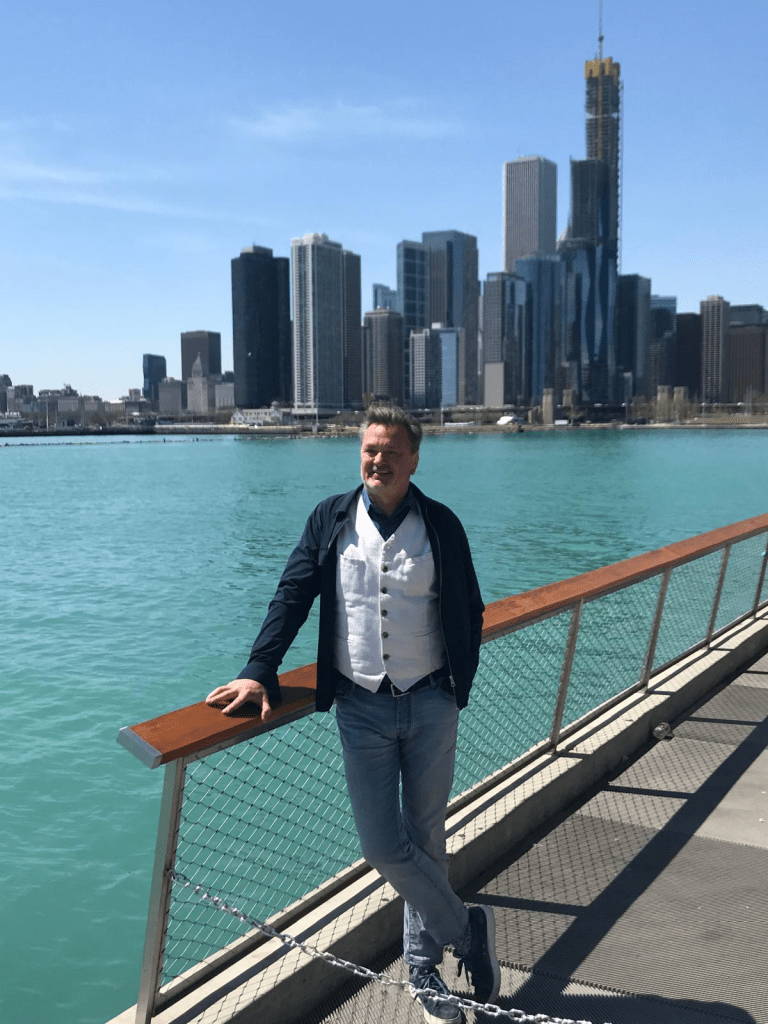
I grew up with two images of America.
That is to say: from the US, the country that totum pro parte is called America. My mom, born and raised in Amsterdam, was 17 years old when the Nazis occupied the Netherlands. Her older brother was taken to Germany as a forced laborer and returned traumatized. She herself survived the so called hunger winter of 1944-45 by walking 150 miles with her younger brother and sister to a place where there was still something to eat.
After the liberation of the city in May 1945, for understandable reasons, she maintained a positive image of the US throughout her life, even though it was Canadian troops who entered Amsterdam at the time. Her first experience of real America was when my wife and I took her to New York as a gift for her eightieth birthday. She enjoyed it a lot.
My father never visited the US. Born and raised in the countryside of the northern province of Friesland, he was averse to post-war American power politics. In the sixties he participated in marches against the war in Vietnam and denounced the role of the CIA in coups in South America. Even though both being social democrats most of their lives, they could not agree about their views of the US. I think I have kind of linked both views together. Gradually I have come to the conclusion that the US made many mistakes since World War II, engaged in abuses and caused much suffering in the world in the post-war period, but that the Pax Americana brought relative peace to the Western Hemisphere. This has prevented a lot of war and misery. Certainly in Europe, but also beyond.
After the Second World War, the US urged Europe to decolonize and advocated self-determination of colonies, even though this was partly motivated by limiting the influence of the Soviet Union, which supported many independence movements around the globe.
Let me start by saying that it is difficult, if not impossible, for any European who has not lived and worked in the US for an extended period of time to have a balanced view of the country. That also applies to me. I have traveled to the US regularly, visited many places, talked to various people and delved into history and politics. Nevertheless, I remain an outsider who looks at the country with European eyes. An unbiased view, I hope, even though it is impossible to observe and interpret apart from one’s own values, norms and beliefs.
So, in summary, this is my background: I count myself among the existentialists, represented by the French writer Jean-Paul Sartre. Existentialists believe in the freedom and responsibility of the individual to shape their own life. Man must give meaning to his own existence, in a world that in itself seems meaningless. Existentialism is a humanism because man was not created and therefore not predetermined to be anything. Man has no origin and no purpose, he must form himself and is fully responsible for himself. That inevitably means that I am also an atheist. On an individual level, I have no problem with religious beliefs, as long as the views of those who think differently are respected and no religious rules are imposed on others. I view religious beliefs as opinions and believe they should be treated equally. From a scientific point of view, I even consider religious beliefs to be completely untenable opinions, but if they provide guidance and comfort to individuals, that’s fine with me. I distrust religious institutions though, especially when they mix with political institutions.
Whether it concerns the Catholic Church, which openly supported dictator Franco in Spain, the Russian Orthodox Church that supports Putin and his war in Ukraine, or the reign of terror of the ayatollahs in Iran, the combination of politics and religion proves to be a toxic mix over and over again. That’s why the strict separation of church and state is an absolute necessity for the rule of law.
I do have strong opinions on social themes, but I am averse to radical political views. On certain issues I am somewhat conservative, but on most major social issues I am mainly liberal. For example, I am against unbridled mass immigration, not because of the origin of the migrants, but I think too many newcomers leads to social tensions and sometimes even disruption. However, I am firmly against mass deportations of undocumented migrants because I believe such practices are inhumane and degrading. I welcome tough action against all forms of crime, as long as those actions are within the bounds of the law and every lawbreaker, powerful or powerless, rich or poor, white or black, is treated the same.
I am in favor of full self-determination when it comes to issues like abortion and euthanasia. I am not a fan of the woke movement, canceling people who think differently is pure intolerance. Nor am I a fan of ultra-rich social media owners who use their algorithms to poison the minds of the generally uninformed masses.
When it comes to the conflict in the Middle East, unlike most people, I refuse to take sides. I find ultra-Orthodox Israelis creepy bastards and the violence used by the Netanyahu government excessive and counterproductive. But I’m also not positive about a Palestinian state enforced by Islamic fanatics like Hamas or Hezbollah. It will become a puppet state of the fascist theocracy of Iran.
I am concerned about overpopulation, environmental pollution, climate change and declining biodiversity, although I must admit that am not that worried about the demise of the earth that I am adjusting my lifestyle, which has a way too large footprint. Except maybe the fact that I didn’t bring any children into the world. With the ever-growing world population, I didn’t think it was necessary to add a few more.
I am in favor of globalization and free trade simply because it generates widespread prosperity for the greatest number of people, even though I realize that not everyone benefits equally. I therefore believe that social legislation is necessary to prevent major differences. I am a strong supporter of far-reaching European integration to counterbalance the superpowers US and China. Oh, and by the way, I don’t think the US is the greatest country in the world. But I don’t think that about any other country, or the EU for that matter. I do know which countries qualify as the worst country in the world though. I don’t envy anyone who lives in Iran, Venezuela, North Korea, Russia, Belarus, or China, just to name just a few. Authoritarian regimes, the lack of a rule of law and little to no individual freedom make life in such countries hell.
So much for my ideological beliefs, the filters of the glasses I view the world around me with. I now turn my gaze to that superpower on the other side of the Atlantic.
I visited some Asian countries before I visited America for the first time. It is no surprise that the culture shock I experienced in Asia was greater than in America. European countries did colonize both continents, but the outcome we experience today is completely different. Although European colonists have enslaved the inhabitants of various Asian countries, the indigenous population has ultimately achieved independence and self-determination.
Things were different in North America; during the first wave of migration, from 1607 to 1776, mainly Western Europeans, British, Dutch and Germans, settled in the colonies. The colonial economy grew, mainly due to a South American tobacco variety that became very popular in Europe. After the mass death of the indigenous population as a result of violence, hunger and disease, followed by the complete marginalization of the remaining Native Americans, America is developed by European settlers according to the Western model.
British oppression led to the American War of Independence in 1775, which ended in favor of the thirteen colonies. The Declaration of Independence of 1776 was strikingly progressive compared to the European monarchies of the time. The introduction of democratic principles such as popular sovereignty, freedom and individual rights remained limited in practice, because slavery continued to exist and women and non-white men did not have the right to vote. Nevertheless, they reflected important Enlightenment ideals, which were later also pursued in Europe, such as during the French Revolution in 1789. The Statue of Liberty in New York, a French gift in honor of the centenary of the American Declaration of Independence, symbolizes this in a unique way; the broken chain represents liberation, the torch represents the Enlightenment, and the crown with the seven points refers to the seven worlds and oceans.
The Declaration of Independence introduced core values that formed the basis for the later US Constitution. The Founding Fathers supplemented those core values with crucial parts of the Constitution, such as the separation of powers as a protection against tyranny and individual freedoms, such as freedom of speech and religion, enshrined in the Bill of Rights of 1791. The declaration has long been regarded as an example of resistance to tyranny, the pursuit of self-government and individual freedom. It inspired the nineteenth century independence movements in Europe and South America and the revolutions of 1830 and 1848.
From 1840 to 1924, a massive wave of migration brought, party due to better means of transport, tens of millions of Irish people, Germans, Italians, Eastern Europeans and Jews to the US, driven by poverty, famine and persecution. Many immigrants who left the European dictatorships sought and found their freedom in the United States. And the US still has a great appeal to people all over the world who want to leave their country for political and/or socio-economic reasons.
How different is polarized America now. In 2020, after his election defeat, former President Trump, who vowed to “preserve, protect and defend the Constitution” in January 2017, encouraged his supporters to storm the Capitol. The Capitol! Seat of the United States Congress, an essential part of the democratic system. Symbol of the legislative power, inextricably linked to the separation of powers that is central to the constitution. Trump, who as former president asked the Supreme Court for full immunity and largely received it, has managed to win a second term thanks to a generous victory in 2024. A term that, given his extreme rhetoric, contempt for political opponents and dissenters, and the yes-men he surrounds himself with, showed tyrannical tendencies before it even began. I don’t want to get too ahead of things, but Trump’s election promises are in poor harmony with liberal democratic principles and international law. Looking through the eyes of a European, his nationalist, isolationist political views and transactional approach to foreign affairs may well mean the end of the long-term bond between the US and Europe as we know it.
America’s gaze is focused on its major competitor China – which was also the case under Obama and Biden, but they were not alienating the US from its allies in Europe. I fear that Trump will. While he warned Europe in his previous term, quite rightly, that they would have to spend more on their defense, he is now threatening to leave NATO and no longer assist Europe if it comes into conflict with Putin’s Russia. On multiple occasions he treated European countries with contempt, not as allies. Even before his inauguration, Trump again shouted that he wanted to buy Greenland and did not rule out economic pressure or military intervention to join the country to the US. To be clear: Greenland is an autonomous country that is part of Denmark, an EU member state and NATO partner. Many Americans will shrug their shoulders at it and the MAGA fanatics will most likely cheer, but these intentions mean nothing less than a schism within the free West and a further weakening of the democratic form of government in the world.
The founding fathers must be turning in their graves. I sincerely hope that the Constitution and strong democratic institutions prevent Trump from taking too bold actions. However, in my opinion, a deteriorated relationship with Europe also has a positive side. It might force Europe to cooperate more, integrate better and reform the EU – into a true United States of Europe. That could turn Europe into a competitor instead of an ally. Draghi, former EU’s central bank president, wrote an authoritative report to boost European market integration, innovation, accelerated digital and energy transitions, and greater economic security measures. Tariffs will prioritize executing that report no doubt. The Trump administration can’t simply abandon Europe as an ally without consequences and count on the desired outcome. Putting America first might even lead to European rapprochement with China. I really hope that never becomes a reality.
What I always liked about the US is its diverse and pluralistic society. Racial separation, racial inequality and discrimination are a shame that cannot possibly be erased. Nevertheless, the multi-ethnic society has proven to be innovative, dynamic and resilient. It is the foundation on which the richest country in the world is built. Wealth, which, by European standards, is very unevenly distributed by the way. And that wealth gap is growing; a small group of extremely rich Americans are now wealthier than over half of the population.
Nonetheless, the land of unlimited possibilities has become inward-looking and bitter. With the rise of China and the decline of American dominance in the world, it seems to me the US is losing its self-confidence. The country feels like a victim of unfair competition and is hitting back with import duties, tariffs as Trump likes to call them. An act of weakness that will have major consequences, especially for the less affluent Americans. The fact that the US imports, for example, more European cars than the other way around is not an unfair trade practice, it is the result of the fact that the Germans build better cars. You can slow down or even prevent imports by imposing huge tariffs, but that will not make American cars any better, it will just make all cars more expensive. It’s how the free market works, a principle that anyone who calls themselves a businessman should know and embrace.
I watch with dismay Trump’s executive orders to reverse the transition to a green economy and cancel the Paris climate agreement. In my home country, the Netherlands, half of all energy is now generated from renewable sources. In Europe it’s 22% overall and growing rapidly. You would think that the damage caused by climate change and environmental pollution would make countries decide to accelerate the energy transition. Not Trump’s America. The major oil companies supported his candidacy and are assured of permission to drill for oil and gas wherever they want over the next four years. If the US succeeds pumping up so much that the price falls, which takes time no doubt, this will of course have a favorable effect on inflation and citizens might fill up their gas tank cheaper again.
But no matter how childish the slogan “drill, baby, drill”, first used at the 2008 Republican National Convention, may sound and how disastrous the long-term consequences of the fossil economy will be, I do see one possible advantage, especially for Europe. Lower oil and gas prices will hit aggressor Russia hard. Despite the sanctions, Russia’s economy seems to be running smoothly. But the question is whether this war economy can be sustained under the current conditions, let alone when the income from oil and gas falls below a critical limit. The country is already receiving less for its oil and gas exports since the invasion of Ukraine because buyers China and India pay less than Europe previously did. A further price-drop could lead to a situation comparable to the collapse of the former Soviet Union.
Today’s Russian Federation has an economy of the same size as the Spanish economy. However, the immense country has three times as many inhabitants, of which 37 million, being 25%, are pensioners, and now spends 9% of its GDP and more than 30% of the federal budget on the production of weapons and the military. Money that is not spent on pensions, education or health care. The country cannot sustain this in the long term, just as the Soviet Union was unable to maintain its failing communist planned economy, partly as a result of the ‘imperial overstretch’ and a costly arms race with the US.
The attentive reader has already noticed that the writer of this post, like the vast majority of Europeans, is not a fan of President Trump. This concerns both his personality and views. I have an aversion to rudeness, pretentiousness and unpredictability. To me he’s the type of vulgar real estate dealer I wouldn’t trust with even my smallest property. His childish desire to constantly praise himself, to be admired, and his obsession with others’ loyalty to him, combined with his vengeful attempts to belittle and silence critics and dissenters. His need for complete compliance by others, versus his own systematic denial, even of obviously culpable behavior. “Deny everything, go on the attack on all fronts and never admit defeat”. These are the lessons of his unscrupulous teacher, lawyer Roy Cohn, which the manipulative Trump has mastered with gusto.
Does his mentality and behavior make Trump unfit for office? That judgment is not up to me, but up to the American voter. The fact that many who worked for him look back on this with bitterness and anxiety certainly did not deter the majority of voters from voting for him. Moreover, not just rabid right-wing extremist muddleheads like Marjorie Taylor Greene, but almost the entire Republican party is now behind Trump. As a result, he completely controls the party, the party’s political direction and the party’s representatives in the government. He basically owns the party. The GOP, once a conservative party, has been transformed into a populist ‘movement’ (as Trump calls it), with right-wing extremists in its midst. The party now tolerates ideas, statements and actions that were considered completely inappropriate just a decade ago. The courageous Liz Cheney, who stood up to Trump’s lies about election fraud, his highly questionable role in the storming of the Capitol and his “crusade to undermine democracy” has been silenced, as have several other Trump-critical Republicans. Initially, there were clear divisions within the Republican Party over the storming of the Capitol and its aftermath. On August 25, 2024, Lindsay Graham told CNN that stormers who had used violence should go to prison. Now that Trump has even granted amnesty to stormers who have used violence, no Republican is speaking out explicitly about this. On January 26, 2025, again on CNN, Graham commented on the pardon of rioters who attacked police with: “I don’t like this.”
The political situation in the US is serious. The liberal democracy, with achievements such as individual freedom and the rule of law, is under heavy pressure. With increasing populism, fueled by the algorithms of the Big Tech platforms where hatred and ignorance are given free rein, the country gradually says goodbye to the principles of the Enlightenment, the basis of Western society as we know it.
In the 18th century, the Enlightenment caused a scientific revolution with many discoveries and inventions as a result. New ideas and a changing worldview brought optimism, empiricism and rationalism. The enlightened ideas that were also applied to society mainly revolved around tolerance, freedom and equality. The Enlightenment focused on progress and replaced religion with reason, promoted the free market economy and put knowledge above origin.
The enlightened thinker Montesquieu thought that politics should be organized on the basis of the trias politica. Instead of placing power in the hands of a monarch, power should be separated into legislative, executive and judicial powers to guarantee the freedom of the population. Now, these basic principles are systematically questioned and attacked by populists. The idea of progress has disappeared and has been replaced by fear of change, and optimism has given way to anger about the loss of Western hegemony. Science is distrusted and religious precepts are restored. The trias politica is dismissed as political hassle of the elite and exchanged for faith in the strong leader who “drains the swamp”.
I still struggle with the two visions of America I grew up with. I cannot ignore my objections to American society, such as the insane possession of firearms and the many victims that result from it and the embarrassingly poor health care compared to other prosperous countries. But I also see the enormous resilience, the large-scale economy with its major innovative capacity and the many cultural achievements, including the music that colors my life and that of many others.
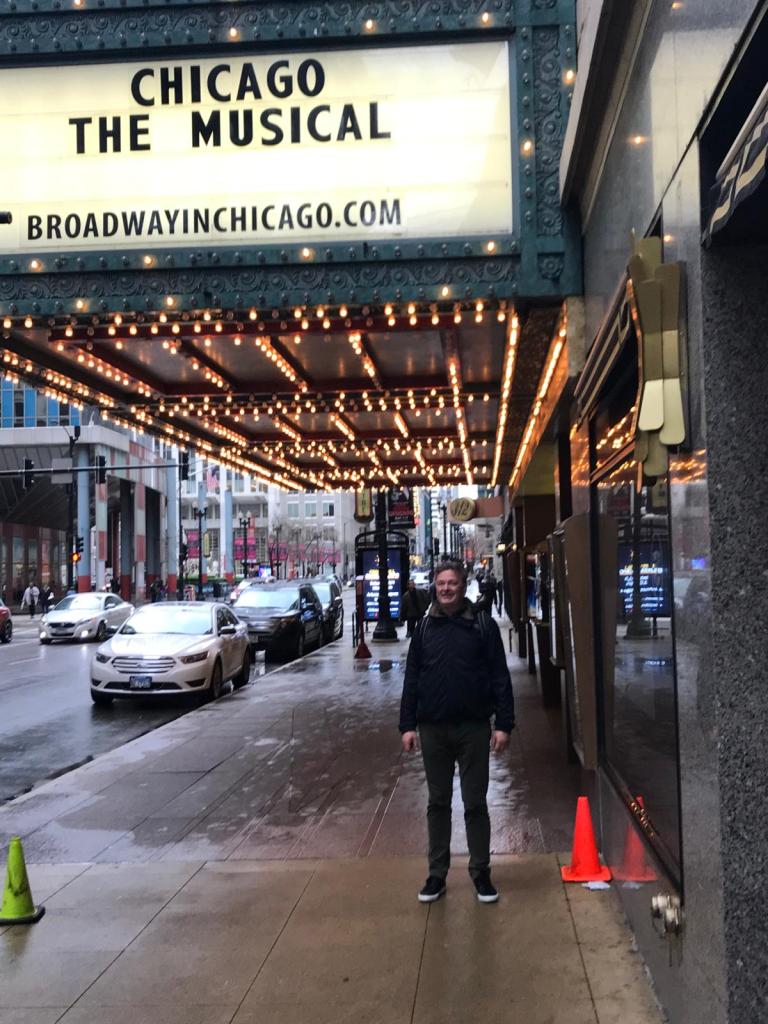
Despite all the gloom about America, I will continue to visit the US. In August I will meet my friend Rob again in Chicago, one of my favorite American cities. We then travel to Alaska, where Shane joins us for our annual get together (our second get together that is, we will meet in Spain in February).
The American people elected Trump and helped the Republicans gain a majority in both parliamentary representations. As a true democrat, I accept that outcome, regardless of the fact that as a European, I have no influence on it. Nevertheless, I think I can have an opinion about it, because it affects me and my fellow Europeans too. I will therefore, wherever possible, oppose any action by the US administration that is contrary to the basic tenets of liberal democracy. As a European who has known nothing other than good transatlantic relations, I fully support the preservation of this relationship though. Because I want to trust the strength of the institutions. The democratic system in America, as in Europe, has been hard fought ever since the Enlightenment and has developed throughout Western history into a balance of power that distinguishes our countries from authoritarian regimes I refuse to believe that an executive branch can tear this down in four years. I am convinced that Trump’s MAGA movement is an empty shell; it simply lacks vision and a coherent ideology. It will pass. I sincerely hope that the damage done to America and the world remains limited.











 The Martini Tales